

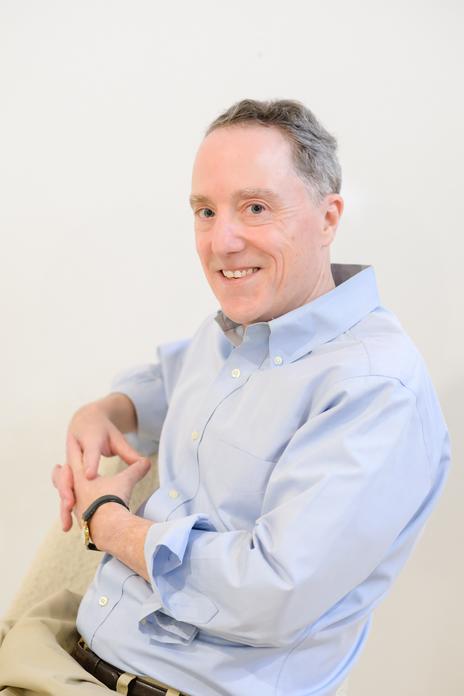
Meet Chris Lippincott
The Spiritual Business Strategist Who Understands Both Your Energy and Your Economics
Evidential medium, spiritual teacher, author, podcast host, and 30-year institutional finance veteran. Based in Asheville, NC.
Most people who come to this work arrive through one of two doors.
Some find the podcast first. They're drawn to the conversations about awareness, intuition, and the ways we shape our own experience without realizing it. They stay because something in it feels true.
Others arrive through a reading, or through someone who told them that a conversation with Chris changed something for them in a way they hadn't expected.
And some find their way here from the business side, through a search for someone who understands both what it means to run an intuitive practice and what it actually takes to make that practice financially stable.
All three paths lead to the same place: the belief that when you understand how you think, what you trust, and what you're actually creating, everything begins to move differently.

A Decade of Spiritual Work
Chris has spent more than a decade as an international evidential medium, spiritual teacher, and meditation guide. His readings have helped thousands of people reconnect with something they had lost, whether that was a relationship to a loved one who had passed, a clearer sense of their own direction, or simply the confidence to trust what they already sensed was true.
His podcast, Spirits Beside Us, grew out of that work. It became a space to have the kinds of conversations that happen in readings but rarely make it into the broader world: how we think, how we create our experience, and what awareness actually changes when we let it. The show has been downloaded more than 368,000 times and is heard in 148 countries.
His book, also titled Spirits Beside Us, became a bestseller.
The thread running through all of it is the same: that most people are living more reactively than they realize, and that understanding yourself more honestly is what changes that.
30 Years in Institutional Finance
Before the spiritual work, and running alongside it for most of his career, Chris spent 30 years as an institutional finance professional. He worked as a senior equity analyst on both Wall Street and in Investment Management, analyzing how companies actually function beneath their surface numbers.
His job was pattern recognition. Understanding where margin was eroding before it became a crisis. Seeing the structural weaknesses hidden beneath revenue growth. Identifying what made businesses sustainable over time versus what only looked that way.
He holds an MBA and the CFA designation.
What he found, when he began working with intuitive business owners, was that the same patterns he had spent decades identifying in corporations were showing up in spiritual practices. Revenue present, stability absent. Busy but not secure. Growing in clients, shrinking in confidence.
The combination of those two bodies of knowledge, structural financial thinking and a decade inside the spiritual industry as a practitioner himself, is what makes the business work different from anything else available.
If This Is You, Read Carefully.
You generate steady revenue.
You’re fully booked.
Clients value you.
But…
Your income isn’t stable.
Your margins feel thinner than they should.
You avoid looking too closely at real profitability.
Pricing still carries emotional tension.
You feel busy — but not financially secure.
You didn’t build a practice to feel financially fragile.
And yet here you are.
This is not a marketing problem.
It’s a structural one.
Before Being An International Medium,
I Worked in Institutional Finance.
For 30 years, I’ve analyzed companies professionally.
CFA Charterholder
MBA
Senior Buy-Side Equity Analyst
Wall Street & Institutional Portfolio Management experience
My job was simple:
Diagnose structural weaknesses before they caused collapse.
I was trained to see:
Margin erosion
Unit economics breakdown
Cash-flow fragility
Debt coverage risk
Operational inefficiencies
Sustainability flaws hidden beneath revenue growth
When something “looked profitable” but wasn’t structurally sound, I could see it immediately.
That pattern recognition now applies to intuitive businesses.
I Also Spent a Decade Inside the Spiritual Industry.
International evidential medium
Spiritual teacher
Meditation leader
Author
Course creator
Membership owner
I understand:
Pricing guilt
Energy exhaustion
Emotional over-delivery
Client dependency loops
Fear of raising rates
The subtle shame of “I should be doing better than this”
Most financial consultants don’t understand healers.
Most spiritual mentors don’t understand business structure.
I understand both — because I’ve lived both.
The Problem I Saw
After years analyzing corporations and running my own spiritual business, I noticed something:
Intuitive practitioners weren’t failing because of demand. They were failing because of design.
Their businesses were:
Too dependent on their personal energy
Built on unstable revenue cycles
Priced emotionally rather than structurally
Lacking retention architecture
Operating without true profit visibility
Revenue was present.
Stability was not.
That’s a structural failure — not a talent issue.
What I Actually Do
I Repair Business Structure So Revenue Converts Into Predictable Owner Pay.
Inside my work, we address:
True profitability (not surface revenue)
Offer and session redesign
Cash-flow stabilization systems
Prepay architecture
Boundary and capacity design
Retention engines
Removing owner dependence
No hype
No “scale to seven figures”
No abundance rhetoric
Just structural repair
Want to understand how my financial background and spiritual training converged?
Learn How I Work
United States