

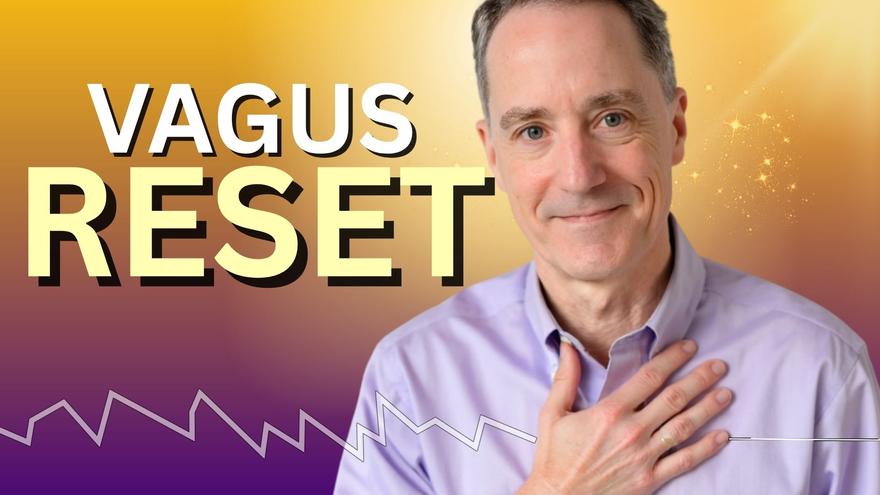
Spirits Beside Us – Episode 111
Watch here: https://www.youtube.com/watch?v=
There’s a moment most people recognize.
You’re finally in bed, the lights are off, and something small—like a single text—hits you the wrong way. Suddenly your heart is racing, your mind is replaying everything you’ve done wrong, and your body feels like it’s under attack.
You try to calm yourself down. You try to “think positive.”
But it doesn’t work.
Because this isn’t a thinking problem. It’s a nervous system problem.
In this episode, I walk through what’s actually happening in your body, why it feels so overwhelming, and how to physically bring yourself back to a state where you can feel calm, think clearly, and reconnect spiritually.
Your Nervous System Is Running the Show
When your body thinks you’re in danger, it reacts instantly.
Your heart rate increases.
Your breathing changes.
Your digestion slows down.
Your ability to think clearly disappears.
This is your sympathetic nervous system—your fight-or-flight response—kicking in.
The important thing to understand is this:
your body doesn’t know the difference between a real physical threat and a stressful situation in your life.
A harsh conversation.
A difficult email.
A moment of uncertainty.
Your system reacts the same way it would if you were facing a real, physical danger.
On the other side of that, when things feel too overwhelming, your body can go the opposite direction—shutting down, slowing everything down, and pulling you into a low-energy, disconnected state.
Neither of these states is where you want to live.
The “Window of Tolerance”
I like to think of your capacity to handle life as a hallway.
When you’re inside that hallway, you can manage what’s in front of you. You’re steady, clear, and responsive instead of reactive.
When you’re pushed above it, you’re in anxiety and panic.
When you’re pushed below it, you feel numb or shut down.
The goal isn’t to eliminate stress.
The goal is to stay inside that window—or know how to get back into it quickly.
Because that’s where clarity lives. That’s where good decisions happen. And it’s the only place where you can actually connect to anything deeper.
Why Spiritual Connection Feels Blocked
A lot of people think they can meditate or “connect” their way out of stress.
But if your nervous system is activated, it doesn’t matter what technique you use—you won’t be able to access that connection.
Your body is in survival mode.
And survival mode doesn’t leave space for intuition, awareness, or anything spiritual.
That’s why I always say: your body is the gateway.
If your body isn’t settled, nothing else will land.
The Vagus Nerve: Your Built-In Reset
There’s a part of your body designed to bring you back to calm.
It’s called the vagus nerve.
It runs from your brainstem down through your body and plays a key role in your parasympathetic nervous system—the system responsible for rest, recovery, and regulation.
When you activate it, you’re sending a signal to your body that says:
“You’re safe now. You can stand down.”
The key is that you can’t think your way into activating it.
You have to use your body.
Three Ways to Reset Your System
These are the three most practical ways I’ve found to bring your nervous system back into balance.
1. The Physiological Sigh (Breathing Reset)
Most people breathe in a way that actually keeps them stuck in stress.
This fixes that.
- Inhale through your nose for 4 seconds
- Take a short second inhale at the top
- Exhale slowly through your mouth for 6–8 seconds
That longer exhale is what signals your body to slow down.
Even doing this for 15–30 seconds can create a noticeable shift.
2. The “Voo” Sound (Vibration Reset)
This one works differently—it uses sound to physically calm your system.
- Take a deep inhale
- Exhale with a low, steady “vooooo” sound
- Let the vibration move through your chest and body
This creates a physical calming effect by stimulating the vagus nerve through vibration.
It may feel strange at first, but it works quickly.
3. Orientation Scanning (Awareness Reset)
When you’re stressed, your vision narrows and your focus locks in.
This breaks that pattern.
- Slowly look to one side and name something neutral
- Then look to the other side and name something else
It sounds simple, but it tells your brain:
“I’m safe. I can look around.”
It’s also the one you can do anywhere—quietly, without anyone noticing.
Using This in Real Life
You don’t need to wait until you’re overwhelmed to use these.
In fact, the more you practice them when you’re calm, the easier it is to access them when you’re not.
I talked about an example in the episode—someone dealing with stress at work who couldn’t calm down enough to even meditate.
In those moments, you’re not trying to become peaceful.
You’re just trying to come back into your body.
That’s the first step.
A Simple Nightly Reset
Before you go to bed, try this:
Do 3 rounds of the “Voo” exercise.
It helps clear out the tension from the day so you’re not carrying it into your sleep.
Bringing It All Together
You don’t need more complicated strategies.
You need something that works in real time.
These practices give you a way to interrupt the stress response, bring your body back into balance, and return to a place where you can think clearly and feel steady again.
And from there, everything else becomes more accessible.
If you want to go deeper into this, listen to Episode 111 of Spirits Beside Us and walk through the exercises with me.
And if you haven’t already, you can also start with my free 10-minute meditation here:
https://montclairmedium.com/free-meditation
It’s a simple way to begin practicing this consistently.
Live your life intentionally, with the help of spirit.

Comments